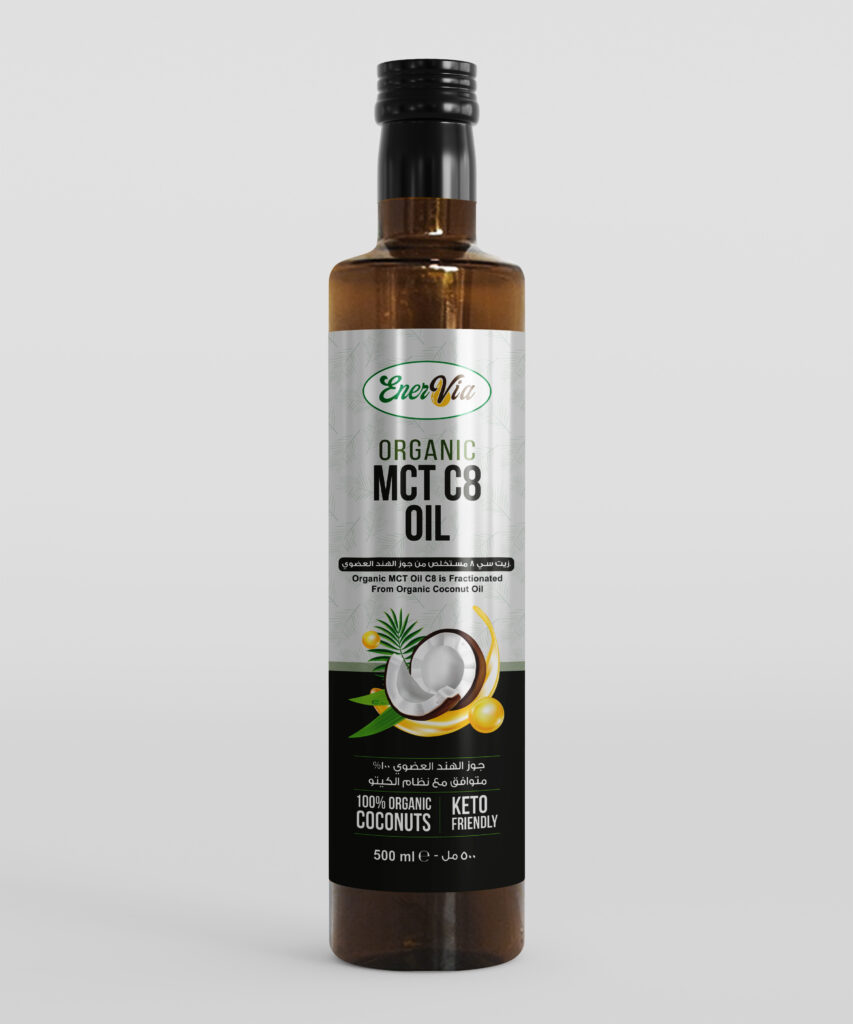
MCT Oil C8 (Caprylic Acid): Pharmacist Training Guide (Mechanism, Dosing, Counseling)
- Posted by Maryam Elzubi
- Categories Complementary medicine
- Date February 19, 2026
- Comments 0 comment

Composition:
100% Vegetable oil (organic MCT oil C8 coconut based).
Patient Profile for MCT C8 oil:
- Physical and mental Support during Ramadan.
- Brain energy support (e.g. long time workers or older adults).
- Patients on GLP-1 injections (Mounjaro, Ozempic, Wegovy).
- Keto / low-carb lifestyle users.
- Patients with fat malabsorption / GI nutrition needs.
- Weight management customers.
- Athletes / active people asking about “energy fat”.
How does MCT C8 work in the body? (Simple mechanism)
After you take MCT C8 oil:
- Quick absorption from the gut.
- Fast delivery to the liver.
- Liver converts parts into ketones.
- Ketones can be used by brain and muscles as fuel.
Some research also suggests medium-chain fats affect the brain activity and cell energy systems.
For a more Detailed Scientific Explanation about the Mechanism of Action of MCT OIL C8
Clinical Relevance for Pharmacists
Understanding the metabolic characteristics of MCT C8 oil is essential for appropriate patient recommendation. Due to its rapid hepatic conversion into ketone bodies, C8 may be useful in scenarios where fast alternative energy support is desired, particularly in low-carbohydrate dietary patterns, ketogenic regimens, and periods of increased cognitive or physical demand.
From a counseling perspective, pharmacists should recognize that the benefits of MCT supplementation are closely linked to dosage titration and gastrointestinal tolerance. Rapid dose escalation frequently results in transient digestive discomfort, making gradual dose adjustment a critical recommendation strategy.
Additionally, while MCT oil may support energy metabolism, it should not be positioned as a therapeutic intervention for medical conditions unless supported by clinical guidance.
Usual Adult Dose for Dietary Supplement:
Start with 1 teaspoon (5ml) once daily with food, after few days’ increase to 1 teaspoon twice daily.
Maximum Daily Dose: Do NOT exceed 7 tablespoons (100 ml) per day.
Important Note about MCT C8 oil:
MCT C8 oil has a low smoke point (it smokes and breaks down), so it is best used cold or added after cooking; avoid frying/high-heat cooking to prevent breakdown.
MCT C8 oil Side Effects:
- Abdominal Cramps
- Bloating
- Nausea
- Diarrhea
Note about the Side Effects:
Gastrointestinal side effects from MCT oil are usually dose-dependent and are more likely when patients start with a high dose. Therefore, part of our responsibility as pharmacists is to educate patients to begin with a small amount and increase gradually to improve tolerance.
Storage:
Cool (<20 C), dry and dark.
FAQ:
Is it safe for cholesterol patients?
MCT oil is a saturated fat source and may influence lipid parameters differently across individuals. Patients with dyslipidemia or cardiovascular risk factors should use MCT supplements cautiously and preferably under medical or dietitian supervision.
Why can MCT oil cause gastrointestinal discomfort?
Rapid absorption and metabolism of MCTs may overwhelm digestive tolerance, particularly at higher initial doses. Symptoms such as bloating, cramping, or diarrhea are typically dose-dependent and minimized by gradual titration.
Can MCT C8 oil replace dietary carbohydrates?
MCT oil does not replace carbohydrates nutritionally but provides an alternative energy substrate through ketone production. It is best understood as a metabolic support supplement rather than a macronutrient substitute.
How much calories in MCT C8 oil?
900 Kcal (3700 Kj) per 100 g.
Can MCT oil C8 be add to the Ketogenic diet of epilepsy
If a patient has
epilepsy and asks about MCT oil, advise them to speak to their neurologist/dietitian
and do not change anti-seizure medicines.
Additional Knowledge: The ketogenic diet for epilepsy is a medical diet therapy that must be planned and supervised by an epilepsy team and dietitian. Also, research suggests that part of the seizure benefit in the MCT ketogenic diet may come from C10 acting directly in the brain (it can reduce AMPA receptor activity), not only from ketones. C8 alone does not provide the same effect seen with C10 in these studies.