
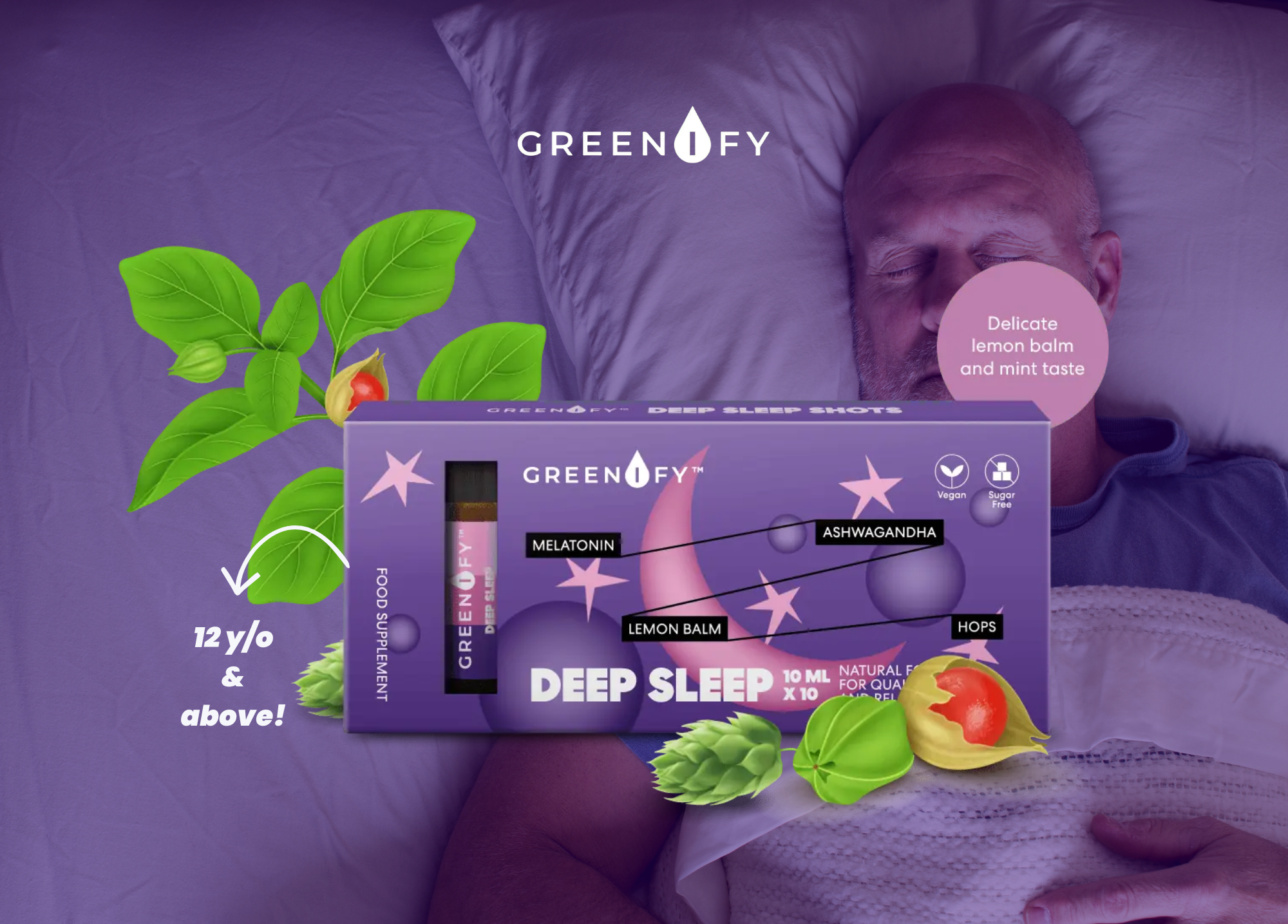
Product Knowledge: Deep Sleep Shots
- Posted by Maryam Elzubi
- Categories Product Knowledge, Complementary Medicine
- Date March 26, 2026
- Comments 2 comments
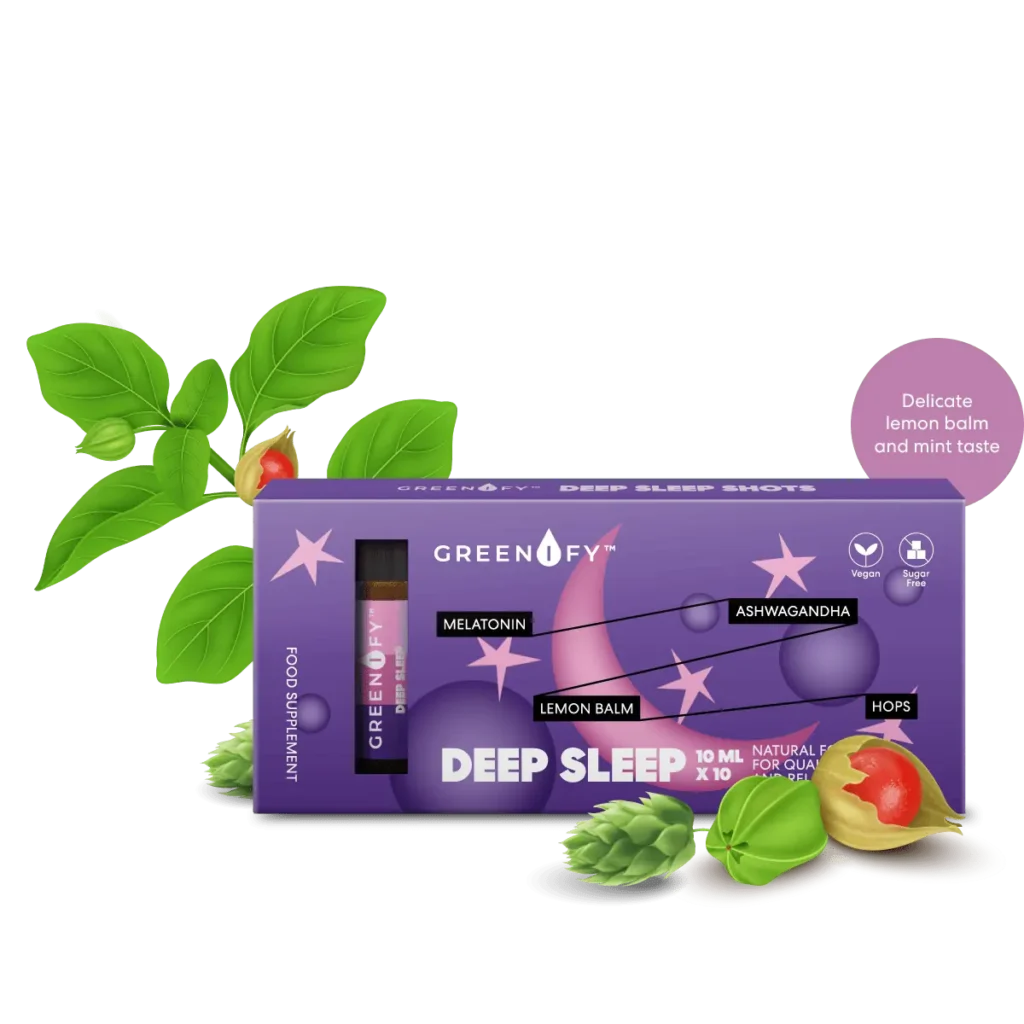
Patient Profile:
Individuals experiencing sleep disturbances linked to daily stress, anxiety, mental overload, or lifestyle factors, seeking support for deeper, more restful sleep.
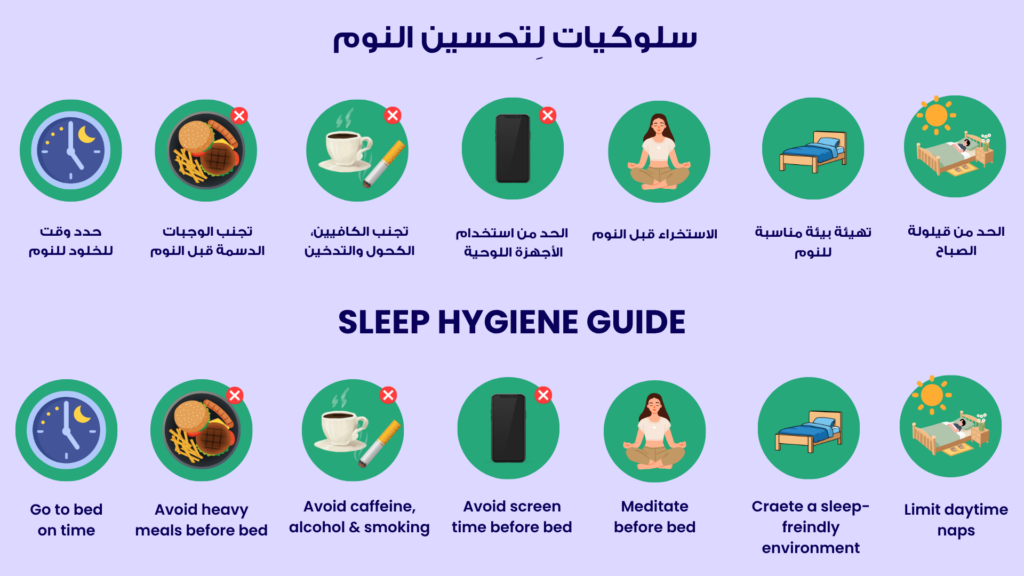
It is important to remember that sleep supplements are not a substitute for healthy sleep habits. Maintaining good sleep hygiene is essential to support their effectiveness and achieve optimal results.
Below is a simple illustration of key sleep hygiene practices:
Composition:
Each 10 ml shot contains the following active ingredients:
| Ingredient | Amount | Role |
|---|---|---|
| Lemon balm leaf extract | 250 mg | Enhances GABA activity |
| Common hop cone extract | 250 mg | GABA receptor modulation |
| GABA | 150 mg | Neuronal calming effect |
| Ashwagandha root extract | 150 mg | Stress response modulation |
| Melatonin | 5 mg | Sleep onset regulation |
Introduction:
Sleep quality is influenced by several interconnected factors, including the body’s internal clock, brain activity, and stress levels. When these systems become unbalanced due to lifestyle stress, mental overactivity, or irregular routines—falling asleep can become more difficult and less restful.
Greenify Deep Sleep Shot is designed to support sleep through a multi-pathway approach, combining ingredients that help regulate sleep timing, promote relaxation, and reduce stress-related disturbances. This makes it a practical option for individuals seeking convenient, daily support for better sleep quality.
What makes Greenify Deep Sleep shots unique:
- Convenient daily liquid shot format
- Fast, more efficient absorption
- Suitable for those who prefer not to take tablets or capsules
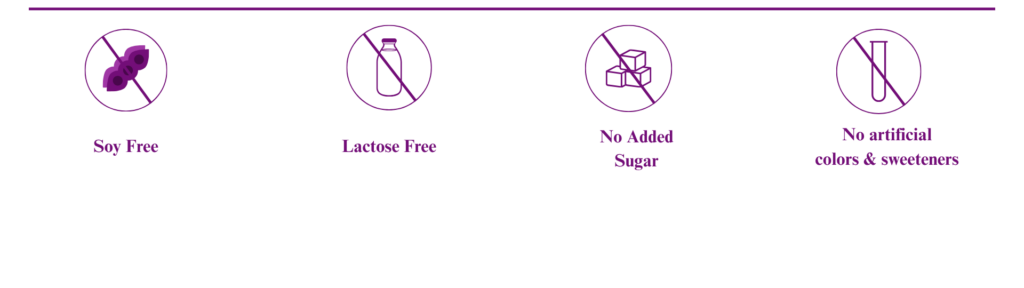
- Sugar-free formula
- No artificial colors
- Pleasant lemon and mint flavor
- Can be used from age 12+ according to company guidance
Mechanism of action:
Greenify Deep Sleep Shots formula targets multiple pathways involved in sleep regulation, including circadian rhythm, neurotransmitter balance, and stress-related sleep disturbances, providing complementary support for improving sleep quality.
1. Circadian rhythm regulation (Melatonin)
A) Melatonin
Melatonin is an endogenous neurohormone made mainly by the pineal gland, with secretion rising in darkness and falling in light. Exogenous melatonin is used as a chronobiotic, meaning it helps align or reinforce the body’s circadian timing system rather than simply acting like a sedative drug.
Mechanism of action
Melatonin acts primarily through MT1 and MT2 receptors, which are G-protein-coupled receptors distributed in the suprachiasmatic nucleus (SCN) and other brain regions involved in sleep-wake regulation. MT1 signaling is associated more with sleep-promoting effects, including suppression of neuronal firing in circadian pacemaker pathways, while MT2 signaling is more linked to phase-shifting and circadian resynchronization. In other words, melatonin does not just “make the brain sleepy”; it biologically signals that this is the correct internal time for sleep and helps synchronize circadian output with nighttime physiology.
Melatonin also contributes to the broader nighttime state by interacting with systems tied to body temperature, alertness, and circadian neuroendocrine signaling. One reason it can shorten sleep latency is that it helps shift the organism from a wake-oriented state to a biologic “night mode,” rather than producing blunt CNS depression. Clinical reviews and meta-analytic evidence support its ability to reduce sleep latency and improve some sleep parameters, especially when circadian timing is part of the problem.
How this leads to relaxation / sleep
Melatonin’s main endpoint is easier sleep initiation. By reinforcing nighttime circadian signaling, reducing biologic wake drive, and helping the brain interpret “it is time to sleep,” it can reduce the time needed to fall asleep and support a more natural transition into sleep. It is best understood as the formula’s sleep-timing and sleep-onset anchor.
2. GABAergic calming system
A) GABA
GABA, or gamma-aminobutyric acid, is the principal inhibitory neurotransmitter in the central nervous system. It is normally produced in the brain from glutamate-by-glutamate decarboxylase, and its physiologic role is to reduce neuronal excitability.
Mechanism of action
In the brain, GABA works mainly through GABA-A and GABA-B receptors. GABA-A receptor activation increases chloride conductance and generally hyperpolarizes neurons, making them less likely to fire. This reduces excitability in circuits involved in arousal, vigilance, and stress responsiveness. Because normal sleep onset requires a decline in cortical and subcortical arousal, GABAergic tone is central to the switch from wakefulness into non-REM sleep.
For oral GABA, the literature is more cautious than marketing claims. Human and review data suggest there may be some benefit for sleep latency, stress, or non-REM sleep, but the evidence is still limited, partly because there has long been debate about how much orally consumed GABA reaches the brain directly. More recent reviews discuss several possible routes: partial passage across the blood-brain barrier under some conditions, transporter-related mechanisms, gut-brain signaling, vagal pathways, and indirect neuroendocrine effects. So oral GABA may still influence relaxation and sleep even if direct CNS penetration is incomplete.
A controlled human study found oral GABA significantly shortened sleep latency and increased non-REM sleep time, which supports a physiologic sleep-promoting effect, though broader sleep outcomes remain less consistently proven across studies.
How this leads to relaxation / sleep
Functionally, GABA is the formula’s core calming pathway. If melatonin tells the body “it is nighttime,” GABA helps reduce the neuronal overactivity that keeps a person mentally alert, tense, or unable to settle. The likely clinical translation is support for mental quieting, reduced sleep latency, and smoother transition into non-REM sleep, though the strength of effect from oral GABA alone is still considered modest and evidence-limited.
B) Lemon balm leaf extract
Lemon balm is a medicinal herb, Melissa officinalis, traditionally used for nervousness, restlessness, and mild sleep complaints. Its bioactive profile includes rosmarinic acid, flavonoids, and volatile compounds that appear to affect several neurotransmitter systems.
Mechanism of action
The best-described sleep-related mechanism for lemon balm is its influence on the GABAergic system, especially via inhibition of GABA transaminase (GABA-T), the enzyme responsible for GABA breakdown. Rosmarinic acid is commonly discussed as a contributor to this effect. By slowing GABA degradation, lemon balm may increase the availability or persistence of inhibitory signaling rather than acting as a direct strong sedative.
Lemon balm also appears to have broader neuropharmacologic activity beyond GABA, including effects on cholinergic and serotonergic pathways, which may help explain why some studies report both calming effects and improvements in mood, cognitive comfort, or sleep quality rather than simple sedation alone. Recent reviews conclude that the most consistent picture is anxiolytic and calming activity, with sleep benefit often emerging secondarily through reduced mental tension and emotional distress.
Clinical evidence, while still not as strong as for standard hypnotics, supports its use in people with stress-related symptoms, poor sleep, or emotional discomfort. In short, lemon balm seems especially relevant when sleep problems are tied to a “wound-up” state rather than circadian misalignment alone.
How this leads to relaxation / sleep
Lemon balm helps by making the CNS environment more inhibitory and less tense. By supporting GABAergic tone and calming stress-related activation, it can reduce the “I’m tired but my mind is still active” state. In this formula, it likely contributes more to emotional settling and subjective relaxation than to strong direct hypnosis.
C) Common hop cone extract
Hops are the cone-like flowers of Humulus lupulus, used traditionally not only in brewing but also in herbal sleep formulations. Important bioactives include humulone and xanthohumol, among others.
Mechanism of action
The strongest mechanistic sleep signal for hops is its interaction with the GABA-A receptor system. Experimental work suggests that humulone can act as a positive allosteric modulator of GABA-A receptors. That means it does not necessarily replace GABA; instead, it can make the receptor system more responsive to inhibitory signaling, which is conceptually similar to enhancing the brain’s own braking system.
Other hop constituents, including xanthohumol, have also been implicated in GABA-A-mediated sleep-promoting activity. Animal studies show reduced sleep onset time and prolonged sleep in certain models, and antagonist studies support that these effects are mediated through GABA_A receptor pathways. This makes hops one of the more mechanistically coherent herbal components in sleep blends.
Human evidence is more variable than the mechanistic data, but reviews suggest hops can contribute to improved sleep quality, especially in multi-herb formulas. So its role in a blend is often as a sedative amplifier rather than the sole active agent.
How this leads to relaxation / sleep
Hops likely deepens the formula’s GABAergic calming tone. If oral GABA and lemon balm help increase or preserve inhibitory signaling, hops may help the receptor system respond more strongly to that inhibitory environment. Clinically, that can translate into greater settling, less arousal, and easier sleep initiation.
3. Stress/ anxiety modulation
A) Ashwagandha
Ashwagandha is the root of Withania somnifera, an adaptogenic herb widely used in Ayurvedic medicine. It is most commonly discussed in modern literature for stress reduction, anxiety support, and sleep quality improvement.
Mechanism of action
Ashwagandha appears to work through more than one biologic route. One major mechanism is stress-system modulation, especially via the hypothalamic-pituitary-adrenal (HPA) axis. Randomized clinical research suggests its stress-relieving effects may be mediated by a moderating effect on HPA activity, often reflected in reductions in perceived stress and, in some trials, cortisol. This matters because chronic hyperarousal and stress-system activation are common drivers of difficulty initiating or maintaining sleep.
On the sleep side more specifically, preclinical work suggests ashwagandha may also interact with GABAergic pathways. Experimental studies have reported sleep-promoting effects associated with binding at GABA-A receptor-related sites and with changes in expression of sleep-related neurotransmitter systems. Another proposed pathway involves influences on histaminergic signaling, which is relevant because wakefulness is partly maintained by histamine-driven arousal networks.
Meta-analytic and review literature supports a beneficial effect of ashwagandha on sleep quality, though the human literature is still developing and formulations differ. The most persuasive clinical framing is that ashwagandha may improve sleep especially when stress, anxiety, or physiologic hyperarousal is a major contributor.
How this leads to relaxation / sleep
Ashwagandha likely helps by lowering the internal stress load that keeps the body in a more alert, activated state at night. So rather than only pushing sedation, it may reduce the upstream drivers of poor sleep: tension, stress reactivity, and hyperarousal. In this formula, it is the best candidate for stress-related sleep disturbance positioning.
Lemon balm contributes mild anxiolytic effects by supporting GABAergic activity through inhibition of its breakdown, which may complement the effect of GABA and promote sustained inhibitory signaling in the central nervous system.
Summary:
The calming effect of this formulation is primarily centered around the GABAergic system, which plays a key role in reducing neuronal excitability and promoting relaxation.
GABA acts as the main inhibitory neurotransmitter by activating GABA receptors, leading to reduced brain activity. This contributes to mental quieting, reduced sleep latency, and a smoother transition into non-REM sleep.
However, since oral GABA may have limited direct central availability, the formulation includes complementary ingredients that support and enhance this pathway.
Lemon balm helps sustain GABA activity by inhibiting its breakdown, thereby supporting prolonged inhibitory signaling. In addition, its interaction with serotonergic and cholinergic pathways may contribute to improved mood and relaxation, making it particularly beneficial in individuals experiencing stress or mental tension.
Hops extract further supports this system by enhancing the responsiveness of GABA receptors (positive modulation), effectively strengthening the brain’s inhibitory signaling. This contributes to a more pronounced calming effect and supports sleep initiation.
Addressing another key contributor to sleep disturbance, ashwagandha works through modulation of the stress response system (HPA axis), helping reduce stress and hyperarousal. This is particularly relevant in individuals whose sleep difficulties are driven by anxiety or prolonged stress.
Finally, melatonin complements these effects by regulating the circadian rhythm, signaling the body that it is time to sleep and supporting natural sleep initiation.
Usual Dose (12 y/o & above):
Drink 1 shot daily, 30 minutes before sleep. Shake before use.
Storage:
Store at a temperature under 25 C, in a dry place. Out of reach of children.
Tag:Deep sleep shots, Greenify

You may also like

Product Knowledge: Greenify Collagen for Joint Shots

2 Comments
Thank you for the update
Appreciated